Showing posts with label #currentevents. Show all posts

Saturday, October 8, 2022

Walter White, Livy, and Ultimate Authority

 Walter White died last night. Again. Unlike the days of 'Who Shot J.R.?,' a story on television, such as, 'Breaking Bad,' can be viewed and relived independently by an infinite number of viewers, an infinite number of times. The conclusion of the tragic story will be the same, but the experience is fresh and new for the viewer, in all the broken ways. I began it a few years ago, and stopped. I put it on the 'do not enter' shelf of my movie/television viewing library. But recently, it surfaced. And once you get sucked in, you have to know what happens to Walter White. What I really wanted to know was what was going to happen to Jessie Pinkmon. I won't spoil it for you, completely.   Although I do not recommend it for the soul whose mind is not prepared to witness the broken underworld of drug cartels and those who partake of its goods. While addiction may be a relatable part for some watchers, the beginning of the story is what draws the average person in, making them wonder what can make someone fall down such a dark and twisted rabbit hole. 

Livy of ancient days, (59 B.C. - A.D. 17) is often quoted as he writes about the fall of Rome, 

'We can endure neither our evils nor their cures.' 

Directing his comments to the more ancient Romans, he asks the reader of his most thorough history of his beloved Rome, The Early History of Rome, to 'trace the process of our moral decline, to watch first, the sinking of the foundations of morality as the old teaching was allowed to lapse, then the rapidly increasing disintegration, then the final collapse of the whole edifice, and the dark dawning of our modern day when we can neither endure our vices nor face the remedies needed to cure them. The study of history is the best medicine for a sick mind; for in history you have a record of the infinite variety of human experience plainly set out for all to see; and in that record you can find for yourself and your country both examples and warnings; fine things to take as models, base things; rotten through and through to avoid.' 

I think back to the beginning of Walter's story, and he is so relatable. He's a gentle, reticent man, outwardly simple, chemistry teacher, who has been diagnosed with a dreadful disease. His wife is pregnant. He has a son with disabilities, and their financial situation is less than promising. Everyone around them seems to be successful in their own way. 

It is clear this show will not be a beacon of (G)ospel truth. But I believe this is the brokeness about which Livy laments: the lack of Lasting Foundations and Eternal Things, exemplified in the lack of guidance by father's and father figures towards noble and godly virtues. 

There is a deceptive level of 'fineness' in Walter's concern for his family's well-being. But at what and whose expense? Those who will be impacted by his new industry, for he becomes a meth 'cook', impacting the safety of his family-- and what of those who use his product perpetuating the endless cycle of addiction?

At each turn in the story, when he returns to his 'normal' life, Walter seems to be a loving father and husband, giving us a false sense of hope. But as his involvement in his drug career and subsequent success heightens, his lack of moral foundation becomes exposed. His words of care about his family well-being become less in alignment with a true sense of care, and more about feeding his new found sense of power. 

At one point he expresses the loss of knowing his own father, and how this impacted himself. He is constantly trying to present a positive role model for his son, wanting to be present and a part of his life. And yet he leads this double life, eventually creating irreparable damage. He has made decisions creating almost no way out of this path. 

Jessie Pinkmon, a willing but highly coearst drives home the point of the generational lack of eternal moorings. For while he has a father and mother who expect him to do without drugs and live a conventional life, they have no reason to offer in their cameo appearances. Even then it is only his mother who comes to deal with him as they severe ties. 

There is one father who tries diligently to keep their child from drugs. While he seems to be the most pro-active, his potential for success is ultimately lacking. I would propose this is where the subtle absence of spiritual moorings becomes most obvious and most painful. He has tried to do what he knows to be right, but he comes up at a loss. For the loss of physical life is clear-- it is tragic and senseless. But the apparent lack of spiritual relationship with a Divine Creator has long been left in the proverbial dust, just as forgotten as the scattered particles of the substance used that ruined the life lost. 

We can say -What does it matter? It's just a show. And I respect if you are asking 'Why should we watch at all?' Humor me a bit longer as I process out this culturally relevant story. We can all see how desperate Walter White was, and how much he needed and wanted o care for his family when he would no longer be able to provide for them. He would become powerless, disabled, impotent. 

White begins with one objective but meets on his way another desirable and truly relatable outcome. He begins by nobly wanting to provide for his family. But he finds that he likes who he becomes, a powerful and respected cog in the feared underworld. This new world he lives in plays outside the rules he is continually constrained by, and he keenly experiences the power that comes with his new found position. His learned skills of chemistry set him apart from all of the others. He becomes highly valued, untouchable. I say relatable. Yes. To work in our combined learned and natural gifts is a blessing. But this is where it becomes acutely clear that White is untethered from essential virtues and ultimately from his Creator. 

While Livy does not directly point to the God of the Hebrews nor to the Father of the Christ that would shake his present history of his own world, Livy does remind us that in the record of civilization, one 'can find both examples and warnings; fine things to take as models and base things; rotten through and through, to avoid.' Avoiding mind altering addictive substances and the activity of producing such is a given to 'avoid.' But what example of 'fine things to take as a model' are absent, an absence so keenly felt in this not so impossible to believe story? 

Ultimate and fundamental authority is a theme worthy of its own exploration. The brokenness becomes clear because we eventually find ourselves thinking outside the realm of law abiding ideology. The relativity of 'right and wrong' are on clear display, and the discussion of fundamental divine authority are never broached- but are they? There is something in Jessie Pinkmon's role in this tragic story that keeps bringing us back to the sanctity of life. His circumstances and experiences keep involving innocence lost and we see him embrace his long disabused sense of morality only to have it challenged and crushed again, and again. When an encouraging word could have propelled him to a new life, that ultimate Authority is no where in the memories of anyone's experience and the climax and denoument are 'rotten through and through.' 

Most in this story do not 'endure their vices,' nor do they know the Cure. I say White is relatable because he is. The statistics of this award winning television's show are astounding. Perhaps some watched because it is so far fetched, so well written and entertaining escapism. But it is also relatable. Up until 20 years ago, one didn't have the standard $500 upcharge of the cost of living for all of the electronics and entertainment packages that are now an assumed part of life. The White family are typical, average, even having a memory of what might have been a financially life altering success story. They are mainstream. The absence of the Cure, the knowledge of one's Creator is no less important- it's just not within reach. The stretch is too far to find a redeeming outcome.

Here is my question and my take away: Years ago, I wondered why the Brady Bunch never went to church, and I went 3 times a week. It should be no surprise that a story like Walter White's is even broadcasted- this is just the natural progression of 'the disentegration, the final collapse of the edifice' of our collective moral soul. But 'The Cure,' the Balm of Gilead is no less effective in saving men's souls than it was when Livy wrote his history of one of the most eventually corrupted empires of the known world. 

Mankind will ebb and flow to and from its Original Source and Designer. 

Ultimately it is up to me to seek the Ultimate Authority about any story or experience I may hear or have.  The chroniclers of our day are not reliable to remember Our creator. But the brokeness is real and He is needed in every real or conjured experience. 

My point is not to persuade you to watch a broken story, but to urgently on the daily, hourly and each moment, look to the One who is able to heal the brokeness of all our stories. He is able. He is worthy of our attention. 

God be honored in all things. He is worthy. 

 **Be advised: Published in the haste of life. Grammar and composition are on the level of a coffee shop conversation or late night kitchen snack run. 


Wednesday, December 30, 2020

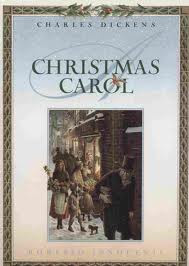
A Christmas Carol ~ Bookshelf No. 8 ~ December 2020

   Charles Dicken's backstory is one not to miss.  As he is widely  appreciated in literary circles, I won't try to retell his story, but will suggest one  considers it before dismissing him or his books. Not only do his books tell stories of unique and brilliant characters, they tell of what  may be our own future if we are to look closely enough. For there really is nothing new  'under the sun.' The stories may have different customs and styles, but there is the  constant thread of humanity, both the broken and the victorious and the choices his characters have made. 

According to the church calendar, it is the 5th day of  Christmas, 2020. While I do not officially follow that calendar, it is a point of reference I've begun to appreciate. After the hustle and bustle of pre-Christmas Day events, the world slows down,  and if you don't rush to put away your chotchkies and decorations, those representative lights can illuminate an almost lost opportunity to embrace some of the most beautiful traditions ever. 


Our little family is well acquainted with Christmas Carol . Each year, we have either watched or read the story in part or whole. There are numerous cinematic offerings. My favorite is the 1931 black and white, but from trusted friends, I've heard the Muppet version is good also. I'll have to take their word for it. Not gonna happen. But my favorite scene is one Eric shared with our church family one Christmas Wednesday evening in Baton Rouge. Scrooge has just become aware of Marley's ghost and his presence has overtaken the room. Marley is a visage, but  to better understand  him, Scrooge invites him to sit, if he can. Like most of humanity, we don't understand what the after-life is really like and Scrooge is no exception. 

I will not argue Dicken's theology, but I'll use it as an example of what the human mind can understand. Our lives are not a pointless experiment, like Elton John once asked in song, in which we have no say.  Marley describes his 'traveling' after-life, with, 'no rest, no peace. Incessant torture of remorse.'... Holding  up his chain at arm's length, as if that were the cause of all its unavailing grief, and flung it heavily upon the ground again. 'At this time of year, I suffer most. Why did I walk through crowds of fellow- beings with my eyes  turned down, and never raise them to that blessed Star which led the Wise Men to a poor abode? Were there no poor homes to which its light would have conducted me!' 

In the twilight minutes of 2020, we are blessed with the reset of a new year.  Llike most, I remember from the past few months a few 'paper-bag ' moments where the room wouldn't stop spinning, where everything felt lost and would never be recovered. I noticed this year, while watching  'It's a Wonderful Life,'  similarites to 'A Christmas Carol,' --the feeling of relief when what was familiar and beautiful came back into focus or was revealed a new, in the case of Scrooge, at the end of each story. 

Last year at this time, I was mid-year in a Life Mentoring class with Edie at Life In Grace. In bold letters across a journal, I wrote like all the other classmates, '2020 - Best Beautiful Year.' Yup. I did. What a joke-- or was it? Would I trade all that has happened? or the  transformation and growth that has come. I crossed through those seemingly bogus words at one point and wrote in the margins of my dream/ planning/journal I'd carefully curated, 'All is not lost, they(hopes) are still there, and they are good.' I don't know about you, but every fiber in my being was tested this year. Every nerve and synapse found places I didn't know existed. I found myself like Scrooge, facing the unknown on my knees with my hands in my pockets, reflecting and thoughtful,  desperate, wishing for the mortal, temporal rest in the comfortable, for the easy.  But easy doesn't create change or growth.  

'Reset' is a charged word these days. But a reset, like Dickens has offered to us is one I'll take.  Scrooges eyes are opened. And  I would assert like no other new years eve, my eyes have been opened too-- to the brokenness of my life and the world, but also again to the opportunities of victory as well. 'Do it scared,' has a whole new level of meaning. But as every generation who has gone before would agree, like it or not, the new year has come, and the choice is mine. What will I be reflecting on in a year? In many ways, it feels like we have no choice, but that isn't true. We do. We always do. 

My chalkboard Wall

Wednesday, December 23, 2020

Hope Believes All Things ~ Bookshelf No. 5 ~ December 2020

   'I couldn't put words to it, but Swede, as usual, could.  
"Afraid we're being impertinent?" 
 "Yes." 
"Presumptuous? Arrogant? Blasphemous?" 
This still happens with Swede and me. I'll lack a word, and she'll dump out a bushel of them. 
  "You called Jonah a griper---"
"Well, you read about him. After the whale he goes to Nineveh and tells the pagans to repent or God'll burn them to death, and their cows too. So the pagans repent---- ashes and gunnysacks from the king on down! And you k now what Jonah does?" 
"No," I admitted. (R euben)  Actually, I thought the book ended when he got coughed up. 
'He mopes! He marches off in the desert and asks God to burn those pagans anyway, and their cows." 
"Well, that wouldn't be fair,"I said. 
"That's what  God said too, but Jonah sat there pouting. Lip out to here! He didn't want those pagans to repent; he wanted a barbecue." 


 I love this bookPeace Like A River by Leif Enger.    I love how Swede and her brother, the narrator, Reuben Land, sort things out, talking things over. They ask the big questions, reference timeless standards and stories, and come to their conclusions.  Until the next day  when they are faced with a new challenge, maybe bigger and more difficult than anything they might imagine. Their stories inform their souls then too. 
I don't believe 'books teach us lessons.' In a sense they do, or can but that's a distilled conclusion. A writer worth his salt sets out to tell a story that will convey what he or she knows to be worth telling, the remembrance they wish to share with their children or their community, shaping future generation's culture. Enger does this through the voices of Swede and Reuben. At one point Reuben reflects on Swede's perceptive observations: 
    "Well, we all hold history differently inside us. For Swede such episodes retold themselves into a seamless and momentous narrative; she had a Homeric grasp on the significance of events, and still does; one of her recent letters asks, Is it hubris to believe we all live epics? "

I heard a politician in our heated Georgia climate say yesterday, he had picked an unusual time to get into politics. Yes, yes he did. But there he is. How do we govern our hearts when we are called for 'such a time as this?' It's not for me today to assess him or his heart, but it is for me everyday to reflect on my own. While marking wrong doing and weighing matters of justice and right, it is the easy path to be swept up in the heat of the moment. Like Swede and Reuben, it is for us to wrestle with what we know to be true and stepping back to see a broader picture. 

A few years ago, a friend graciously asked me to attend the Kupendwa Ministries Dinner here in Athens. She was hosting a table and I was blessed, along with my friend Debbie who came with me. I saw Amy Washington,  the visionary,  and her family who have given their lives to 'the least of these.' I heard Bob Goff speak, the author of Love Does, Discover a Secretly Incredible LIfe in An Ordinary World. He spoke of an usual time in his life when he was presented with an opportunity and he had no idea from where the resources would come. His laughter and engagement was contagious! We laughed so hard and cried with him in joy over the success of the 'extraordinary ordinary' that he had seen manifested. 

'You won't ever be able to keep up with unrealistic. Unrealistic demands lead to undercurrents of failure. So don't allow the unrealistic demands of others to march freely into your life. Resolve instead to make decisions based on what is realistic-- not on trying to earn the approval of or impress another." 
I would offer Swede's approach to synthesize what we know, instead of living by one slogan or mantra. I must be realistic about what I can do on my own. But I must lean into the unknown with faith and hope, like Bob and Amy, who have relied, like Lysa also, upon God and HIS miraculous power.  Swede and Reuben go on in their conversation to bring up others from the Old Testament who trusted boldly. 
Bold belief, bold hope leans into faith which leads to confidence (' a memory of success'.)* Realistic becomes empowered by informed faith and hope, and my worries calm down. I worry less about the wrong and focus on the right, and what the right can even do. My lack of confidence or lack of faith are empowered by what God can do, in my life and even in the life of those with whom I disagree, or worse- those on whom I might wish 'a barbeque.' 
Hope. Real, true Hope. 'Hope... believes all things.' 'Lord I believe, Help my unbelief.' 

What words do I live by? 


Friday, August 28, 2020

Perspective ~ August 2020


As I have many times, I took this picture on the way home from dropping the boys at school. This isn't a well planned photo, nor did I use an exceptional camera. I snapped it with a fairly new cell phone at some distance back from the road, and through my front windshield. In times past, I have gotten out of the car on the side of the road, even walked across, standing just a little bit higher
 than my seated position in the car. 
Today coming back, it seemed particularly beautiful, bright even after such a rain as we had last night. The weather is oppressively hot and steamy, which is why I probably stayed in the car. But I wanted to capture this picture. It's a part of a contemplative habit I have developed to revisit same places and reflect, photograph, think, stop and reset, or even prepare for the remainder of the delayed morning. 
The photo did not demonstrate or reflect what I actually saw. It didn't capture the mist, the sun beaming subtly through the clouds. It  highlights the street sign and misses 
the natural beauty I try to see and focus on 
when I make this stop. 
I look at this picture and contemplate the confusion over perceptions, photo/video, angles, details, life experience, and what is really going on in this picture. Then the #currentevents bombard my brain. I stop when I come to: why is a child in a place where they might witness what Jacob Blake's son witnessed? How did Jacob Blake get to that point. 
All the thoughts, but that is miles away from me, if only geographically. 
This year has brought no end to chaos, even in my small unremarkable world. I have felt the feelings of hopelessness more than once, having nothing to do with a country in shutdown or a virus or cultural crisis. Unresolved goes the question, 'How did we get to this place?' Sometimes it (chaos in my life) really had nothing to do with my actions, yet, if I am unfaithful in the details of my small world, I'm not supporting and contributing to what good 'could be.' Do I say, 'I just can't.' or 'I can't even.'  Have I thrown up my hands, stepping away to yet another glittery, tasty, reductionist distraction. 
There are so many things I can not change with sweeping grand-gesture-like motion. But I can change and do what is right before me. The least I can do is follow through with that.
That sounds rather wholesome. Down right 'Mother Teresa.'-- Her birthday was yesterday. So inconsequential could she have been, if she had just taken a different path. But she didn't and so she is widely known for simple single acts of love. Loving the one right in front of her was her trademark. She knew, like we say  'know by heart,' that purpose is not always grandiose, and usually it only shows up on the grid and statistics chart after a long succession of small acts over a long period of time. Was her purpose far from home? I believe she didn't live (Calcutta, India) where she grew up, but she did settle down. At some point we settle down in our souls, and we learn that  our purpose is where ever we are to do what is the next right thing. And it is from those faithful habits we can draw support when the times get tough. We have in our storehouse moments of beauty to support our moments of sorrow. But it comes with choosing our perspective. And looking at the circumstance with determination to control our thoughts. If I depend upon the perception of the one isolated picture of how things seem,  I am missing out on how things could be, and likely the reality of the good will escape me altogether. 
Same stretch of road, different day, same camera. 


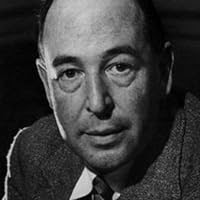
Little Decisions & C.S. Lewis ~ March 2025

  “Good and evil both increase at compound interest. That is why the little decisions you and I make every day are of such infinite importan...